The responsibilities of CRAL’s optical experts include:
- analyzing a scientific need and translating it into technical specifications for instrument design
- designing an instrument
- theoretically analyzing the instrument concept
- drafting technical specifications
- consulting with industry partners or internally regarding the instrument’s production
- design integration, acceptance, and test plans
- manage and oversee the integration of systems and subsystems
- oversee the execution of tests, interpret them, and validate them at various stages of the project
These tasks are carried out on instruments designed by CRAL’s instrument scientists. In addition, there is an R&D component to conduct studies with scientists from CRAL or other laboratories.
The optical experts at CRAL’s Instrumentation Division have access to an optics laboratory and an integration hall.
Their main projects and activities are as follows.
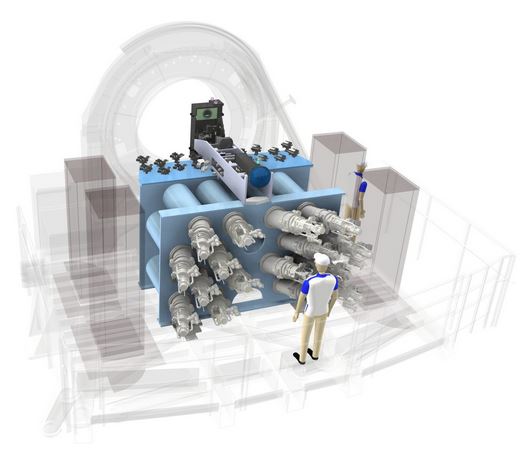
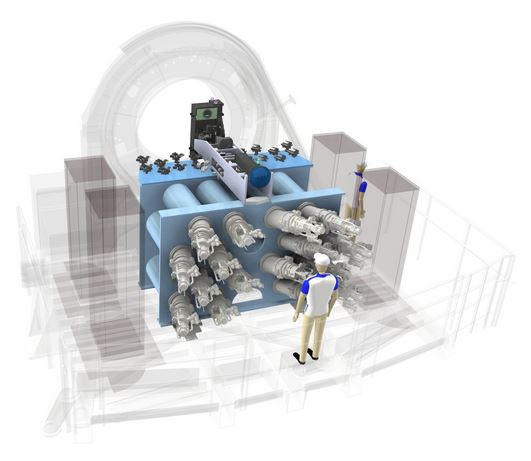
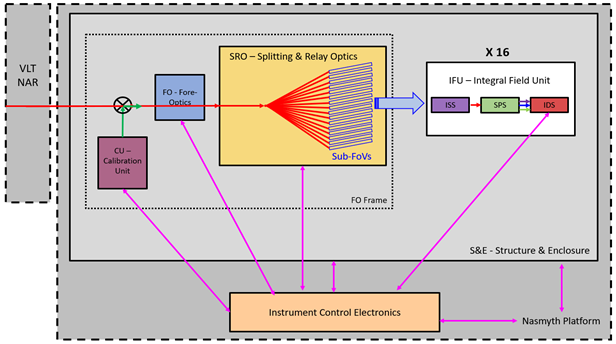
Integral-field spectrograph (0.45 to 2.45 µm) with a resolution ranging from 4,000 to 20,000 for the Extremely Large Telescope (ELT) equipped with a 39-meter-diameter primary mirror and built by the European Southern Observatory (ESO) in Chile at the Armazones site. CRAL is responsible for the relay system and the image splitter of the HARMONI integral field spectrograph. It is also responsible for the scientific software, including the instrument simulator and data reduction software, as well as the software system for the entire project.
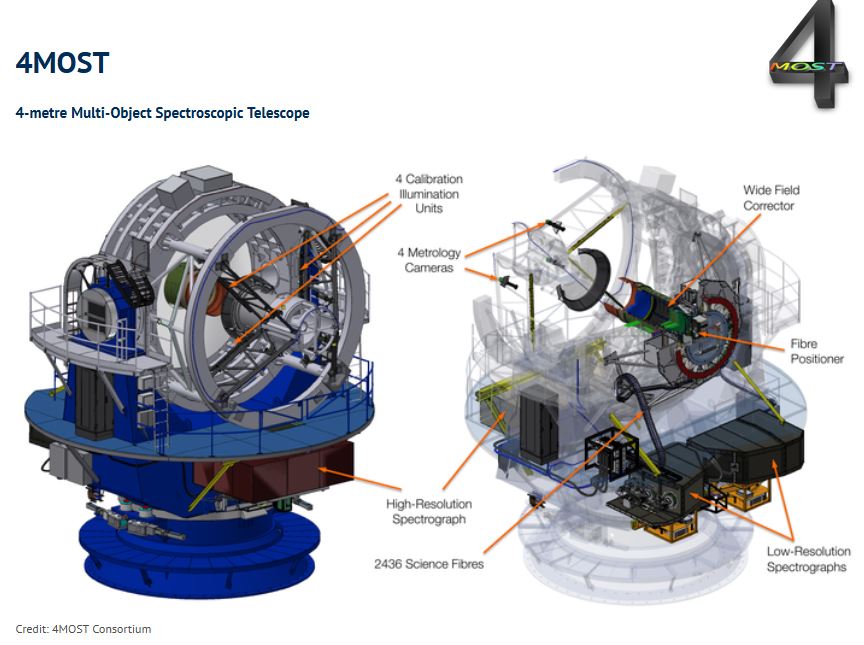
- 4MOST/ESO-VISTA (4-meter Multi-Object Spectroscopic Telescope)
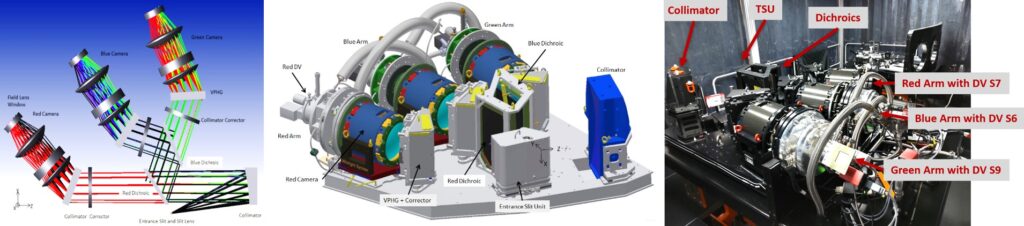
A low-resolution (R=5000) and high-resolution (R=20000) wide-field fiber spectrograph dedicated to large galactic and extragalactic surveys in the visible spectrum (370–950 nm). 4MOST has been in operation on the European Southern Observatory’s (ESO) VISTA telescope at the Paranal site in Chile since the summer of 2025. CRAL is responsible for the low-resolution spectrographs.
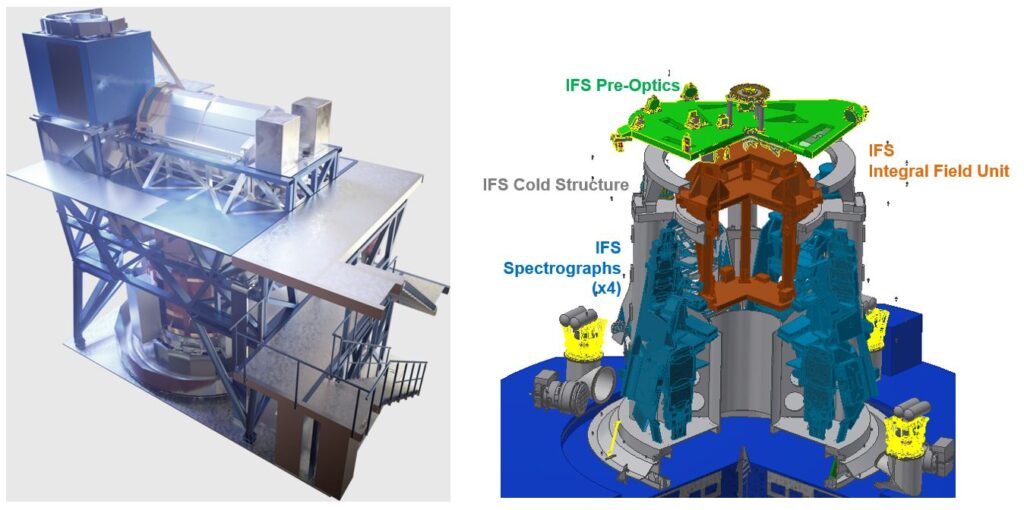
BlueMUSE is an integral-field spectrograph proposed for the Very Large Telescope (VLT) by an international consortium of 9 laboratories led by CRAL. It is an evolution of the current MUSE/ESO-VLT instrument, with a similar architecture but new scientific objectives, made possible by a spectral coverage shifted toward the blue (350–580 nm), as well as an average spectral resolution of 3,500 and a square field of view of one arcminute. The instrument is in Phase B, with operations at the telescope scheduled to begin in 2032. CRAL is responsible for the overall management of the project and the optical monitoring of the work packages.
- R&D Initiatives in Very High Dynamic Range Imaging
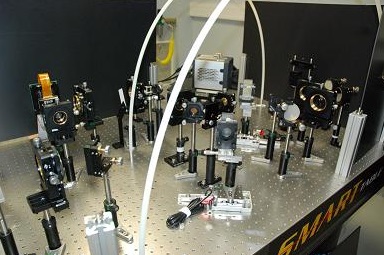
Extreme Adaptive Optics (XAO): This initiative aims to develop new concepts to propose solutions for XAO on the ELT. In this context, an experimental setup has been developed to validate the performance of XAO at the ELT scale. In particular, upstream R&D work is being conducted on a new Mach-Zehnder-based wavefront analyzer, as well as on the control algorithms associated with its closed-loop operation. The experimental setup consists of a telescope simulator, a turbulence simulator, a wavefront analyzer, two wavefront correctors (a deformable mirror (woofer) and a liquid crystal modulator (tweeter)), and real-time computing capabilities for closed-loop woofer-tweeter correction.
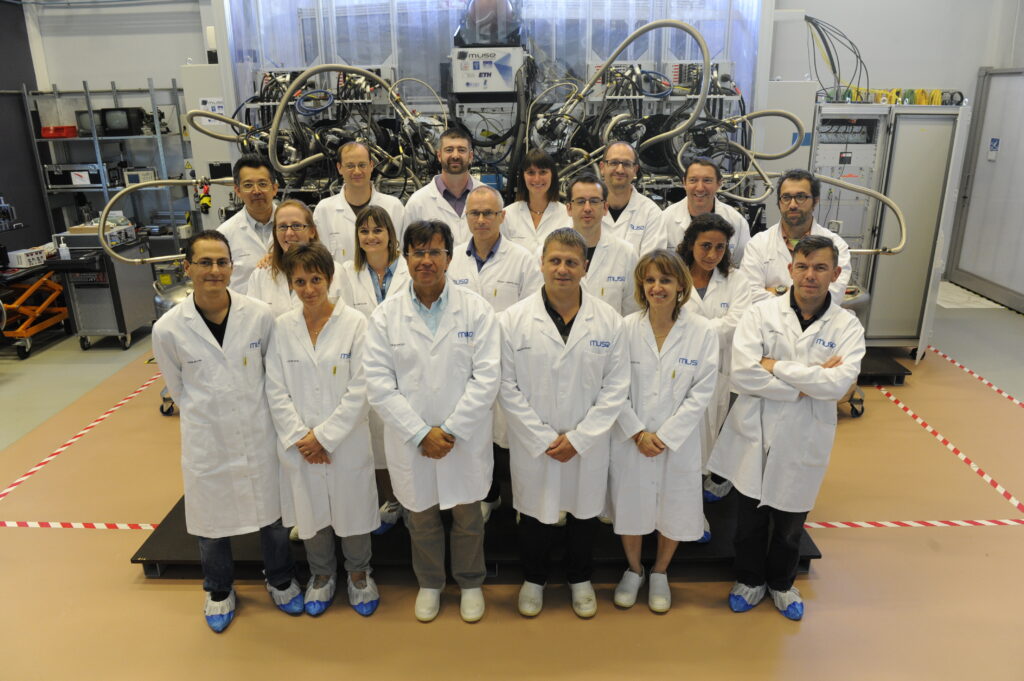
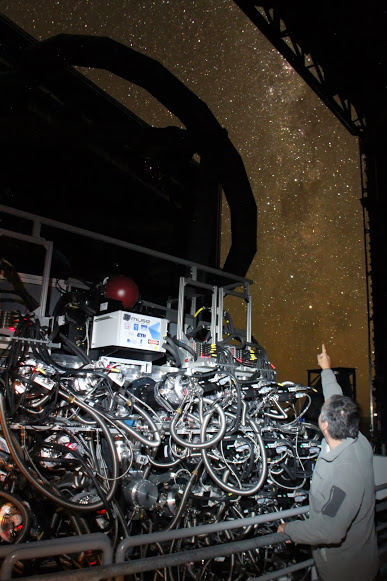
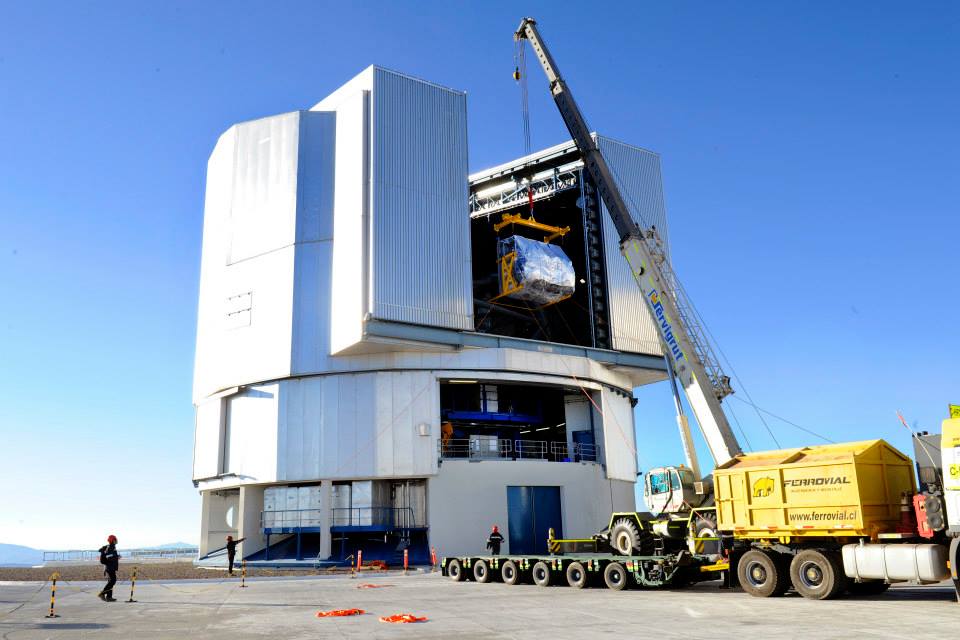
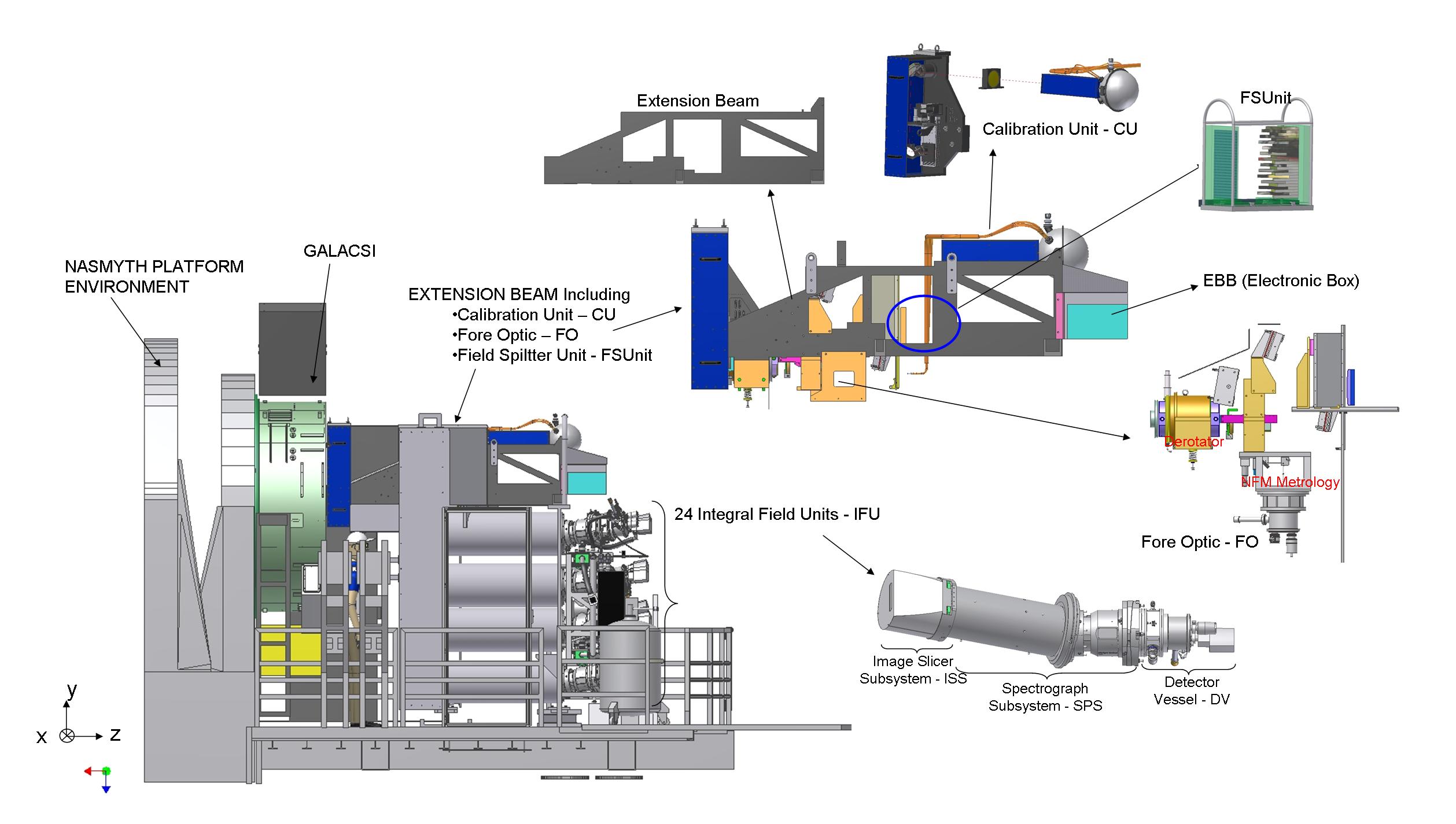
The optics experts were heavily involved in the flagship project of the MUSE/ESO-VLT discipline, a 3D spectrograph selected for the European Southern Observatory (ESO) to equip the Very Large Telescope (VLT) at the Paranal site in Chile. This project, led by CRAL, brings together seven European laboratories: Leiden Observatory (Netherlands), Leibniz-Institut für Astrophysik Potsdam (Germany), Institut für Astrophysik Göttingen (Germany), ETH – Institute of Astronomy (Zurich) (Switzerland), ESO-ODT, Institut de Recherche en Astrophysique et Planétologie (Toulouse), and the Centre de Recherche Astrophysique de Lyon. The optical engineering team was a driving force behind the MUSE project, as it was responsible for the overall optical design, assembly, alignment, and testing of the instrument in both Europe and Chile. MUSE was installed at the VLT in the spring of 2014. Thanks to its unprecedented ability to observe the Universe in volume and depth, MUSE is revolutionizing the study of galaxy formation and evolution.