Instrumentation
Areas of Activity
Instrument Development
The Instrumentation Division is involved in several instrumentation development projects for major observatories, such as ESO and TCFH. It also supports instrumental R&D by participating in the PEPR Origins program and the Europe Horizon EIC Livemirror project.
It is staffed by experts in mechanics, optics, electronics, and project management.
It also has at its disposal an integration hall with an optics laboratory, a mechanical workshop, and an electronics laboratory at the Charles André site, the historic Lyon Observatory.
Mechanics
- Didier BOUDON – UCBL
- Éric DAGUISÉ – UCBL
- Victor MAUGER-VAUGLIN (CNRS Fixed-Term Contract)
- Jean-Emmanuel MIGNIAU – UCBL
Optics
- Alexandre JEANNEAU – CNRS
- Maxime JOURNOUD (Engineering Intern, UCBL)
- Florence LAURENT – CNRS, Head of the Instrumentation Division
- Magali LOUPIAS – CNRS
Electronics
- Aurélien JARNO – CNRS
Project Management
- Rémi GIROUD – CNRS
- Gil MORETTO – CNRS
- Flora PAGANELLI (CNRS Fixed-Term Contract)
- Alban REMILLIEUX – CNRS
Current projects
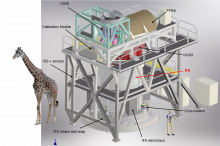
HARMONI (High Angular Resolution Monolithic Optical and Near-infrared Integral Field Spectrograph) is one of the first three first-light instruments of the European Southern Observatory’s (ESO) Extremely Large Telescope (ELT-39m) of the European Southern Observatory (ESO) at the Cerro Armazones site in Chile. It is an integral field unit (IFU) spectrograph that will observe in the visible and near-infrared range (from 0.5 to 2.4 μm). HARMONI will provide a spectral resolution of R=3000 to R=20000, and an angular resolution of 60 to 4 mas. To fully exploit the ELT’s diffraction limit, HARMONI will be equipped with an Adaptive Optics (AO) system. First light is scheduled for 2033.
Objectives
HARMONI’s primary scientific objectives cover a broad spectrum, ranging from the study and characterization of exoplanets and the study of stellar populations in nearby galaxies to galaxies at high redshifts. Thanks to the ELT’s very large collecting area and the use of adaptive optics, HARMONI will be able to detect and characterize the first galaxies at z>7 formed a few hundred million years after the Big Bang, and track the evolution of these early galaxies over several billion years as they undergo enormous transformations.
Involvement of the CRAL Instrumentation Division
The CRAL Instrumentation Division is in charge of the IFU (Integral Field Unit) Work Package, consisting of a relay separator module
and an image-slicing module. CRAL manages a total of €3.1 million and 130 FTE on the project.
Partners
HARMONI brings together a consortium of several European laboratories.
The HARMONI team at CRAL consists of the following members:
Alban REMILLIEUX, Local Project Manager
Nicolas BOUCHÉ, Local Responsible Scientist
Johan RICHARD, Scientist
Rémi GIROUD, PA/QA
Alexandre JEANNEAU, optical designer
Florence LAURENT, optical designer
Magali LOUPIAS, optical designer
Jean-Emmanuel MIGNIAU, mechanical designer
Didier BOUDON, mechanical designer
Eric DAGUISÉ, FEM-computing mechanical engineer
Arlette PÉCONTAL, software systems engineer
Aurélien JARNO, science software engineer
Laure PIQUERAS, science software engineer

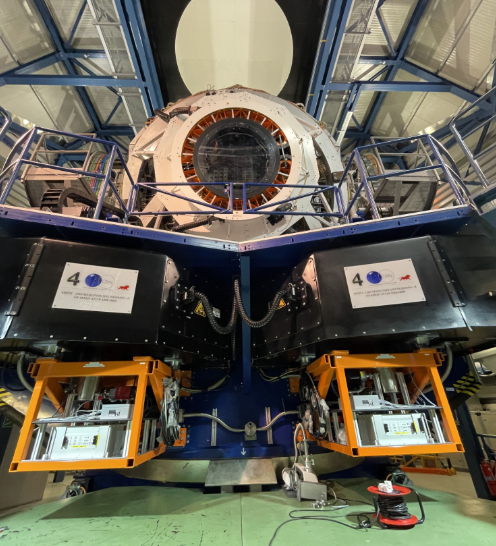
The 4MOST instrument is a wide-field, multi-fiber spectrograph for the European Southern Observatory’s (ESO) VISTA telescope in the Paranal Desert in Chile.
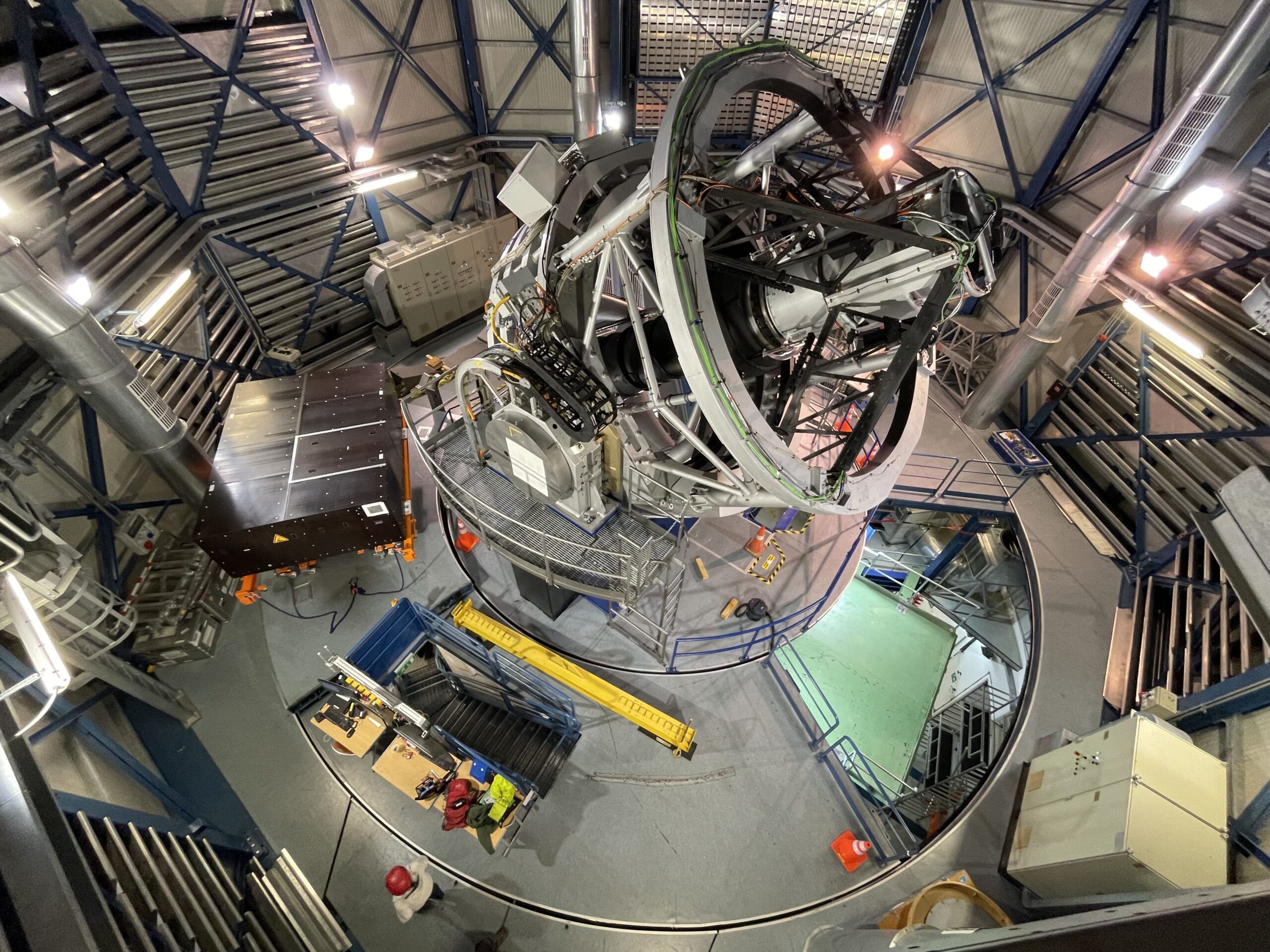
Since 2014, CRAL has been involved in the design, assembly, and testing of the two low-resolution spectrographs. The project has been installed on the VISTA telescope since the summer of 2025.
4MOST (4-meter Multi-Object Spectroscopic Telescope) is a revolutionary new instrument for wide-field, high-multiplexing spectroscopy.
4MOST has a wide range of scientific objectives, ranging from galactic archaeology and stellar physics to high-energy physics, galaxy evolution, and cosmology. 4MOST will deploy 2,436 fibers across a 4.1-square-degree field of view using a positioner based on the tilting spine principle. The fibers will feed a high-resolution spectrograph (R 20,000) and two medium-resolution spectrographs (R 5,000) with fixed 3-channel designs and identical 6K x 6K CCD detectors. 4MOST will feature a unique operational concept, in which the 5-year public surveys of the 4MOST consortium and the ESO community will be combined and observed in parallel during each exposure. The 4MOST simulator was developed to demonstrate the feasibility of this instrument, showing that we can expect to observe more than 50 million objects over the entire study period, and will ultimately be used to plan and conduct the study itself.
CRAL is the French partner in the 4MOST consortium. In Lyon, CRAL has built the two low-resolution spectrographs and co-leads the cosmological redshift survey, while LMA-IN2P3 manufactures the 4MOST LRS and HRS dichroics.
The 4MOST @ CRAL team consists of the following members:
- Alban REMILLIEUX, Local Project Manager (since February 2019)
- Patrick CAILLIER, Local Project Manager (until January 2019)
- Johan RICHARD, Local Responsible Scientist, Co-PI of the 4MOST Cosmology Survey
- Jens-Kristian KROGAGER, Scientist (since January 2022)
- Florence LAURENT, Optical Designer
- Karen DISSEAU, Optical Engineer (until July 2022)
- Alexandre JEANNEAU, Optical Designer for Spectrograph Transmission Measurement
- Jean-Emmanuel MIGNIAU, Mechanical Designer
- Didier BOUDON, Mechanical Designer and AIT Mechanics
- Eric DAGUISÉ, FEM-based mechanical engineer
- Diane CHAPUIS, Mechanical Designer (until July 2021)
- Arlette PÉCONTAL, Software engineer
- Aurélien JARNO, AIT Electronics
- Rémi GIROUD, Support for Local Project Manager (since September 2022)
- Emmanuel PECONTAL, Scientist
- Laurence TRESSE, 4MOST Executive Board member (until January 2021)
- Matthew LEHNERT, 4MOST Executive Board member (since January 2021)
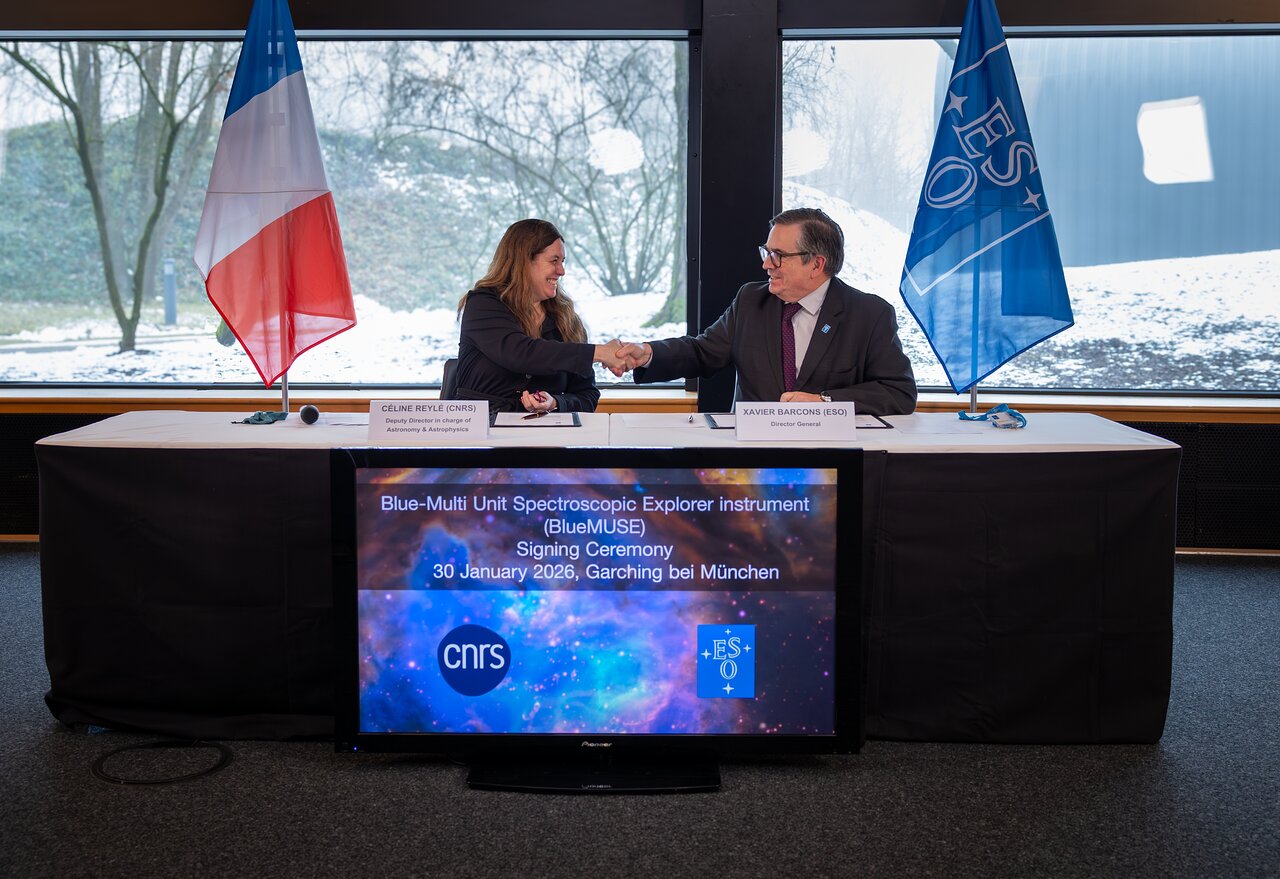
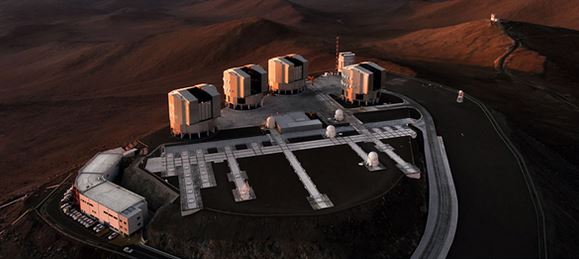
BlueMUSE is a wide-field integral field spectrograph, optimized for the blue, with medium spectral resolution and limited by the quality of atmospheric turbulence. It will be installed on one of the Very Large Telescope (VLT) telescopes located at Cerro Paranal (ESO) in Chile.
The project represents an evolution of the technology used for the highly successful VLT/MUSE instrument, adopting its architecture and technological innovations while pursuing new scientific objectives made possible by its key features:
-
a wavelength range covering 350 to 580 nm,
-
an average spectral resolution of R = 4000,
-
a field of view greater than 1 arcmin².
BlueMUSE will offer unique new scientific opportunities in many fields of astrophysics, beyond what MUSE already enables.
Among its main scientific objectives:
-
the study of large samples of massive stars in our galaxy and in the Local Group,
-
the analysis of ionized nebulae, star-forming galaxies, and galaxies with low surface brightness,
-
and, at high redshifts, the direct detection of the intergalactic medium (IGM) in emission for the first time, as well as the study of the evolution of the circumgalactic medium (CGM) during the peak of cosmic star formation.
Completed projects
The primary objective of the project was to install an adaptive optics system on the 90-cm-diameter THEMIS solar telescope located at the Teide Observatory on the island of Tenerife. A collaboration between the Lyon Astrophysics Research Center (CRAL) and the THEMIS team at the French-Spanish Laboratory for Astrophysics in the Canary Islands (FSLAC) enabled the development of this adaptive optics system for observing the Sun’s surface.
In parallel with the successful commissioning of this system in late 2020, an ongoing collaboration with the FSLAC THEMIS team is contributing to the AIRI team’s TAO project, which aims to develop innovative strategies for real-time control by validating them under actual conditions.
2014 MUSE: Multi Unit Spectroscopic Explorer / ESO-VLT
The Multi Unit Spectroscopic Explorer (MUSE) is a second-generation instrument for the Very Large Telescope (VLT), installed in 2014 on the Nasmyth platform of Telescope Unit 4 (Yepun) of the European Southern Observatory (ESO) in the Paranal Desert in Chile. To observe with MUSE.
2004 SNIFS: SuperNova Integral Field Spectrograph / UH-2.2
SNIFS is installed on the University of Hawaii 2.2-meter telescope on Mauna Kea in Hawaii, United States (Lantz et al., 2003, SPIE). To observe with SNIFS.
1997 OASIS: Optically Adaptive System for Imaging Spectroscopy
A visitor instrument on the Canada-France-Hawaii Telescope on Mauna Kea in Hawaii, United States, and later on the William Herschel Telescope on La Palma, Spain. To observe with OASIS.
1999 SAURON: Spectrographic Areal Unit for Research on Optical Nebulae (Decommissioned instrument) A field-integral spectrograph, a visitor instrument that was installed on the William Herschel Telescope in La Palma, Spain (Bacon et al., 2001, MNRAS, 326, 23 “The SAURON Project. The panoramic integral-field spectrograph” and the website for the associated scientific project). Its structure is on temporary display at the Musée des Confluences in Lyon from June 16, 2017, to September 2, 2018, as part of the exhibition “Carnets de collections.”
News
-
30 January 2026
ESO Signs Contract for BlueMUSE, a New Instrument for the VLT
-
21 October 2025
First light for 4MOST, the next-generation cosmograph
-

15 October 2024
The 2024 BIATSS Award for Excellence goes to Didier Boudon.
-
11 June 2024
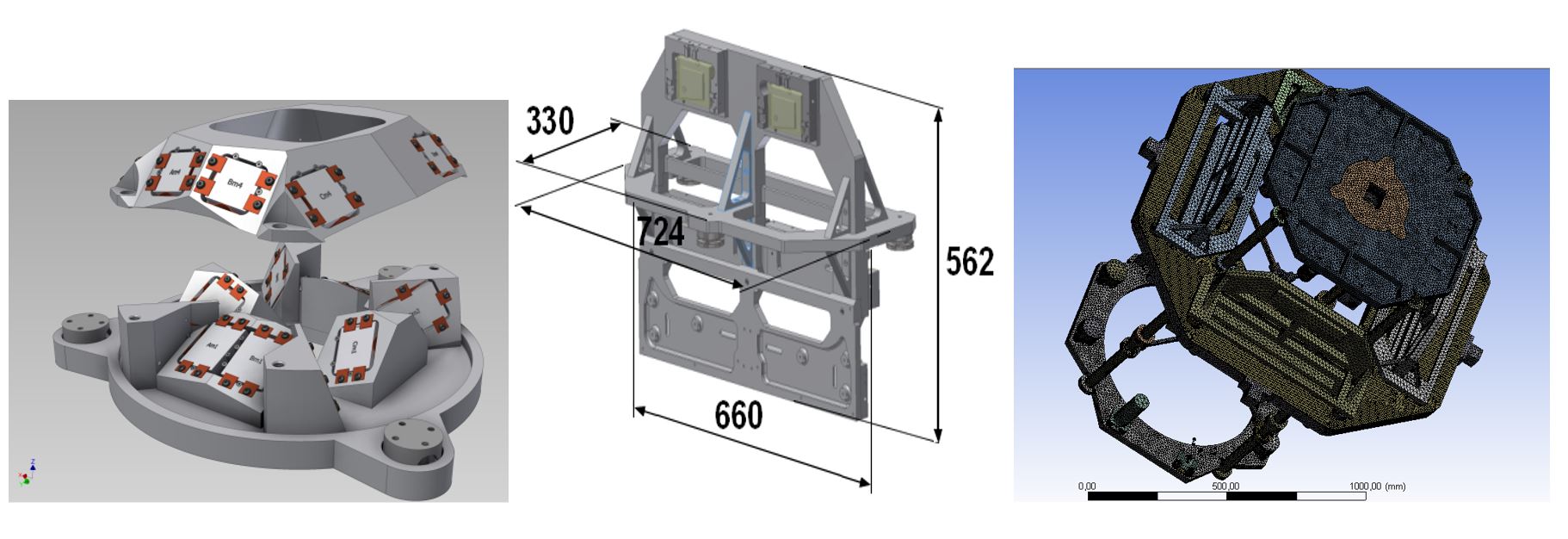
Mechanical Engineering
-
7 June 2024
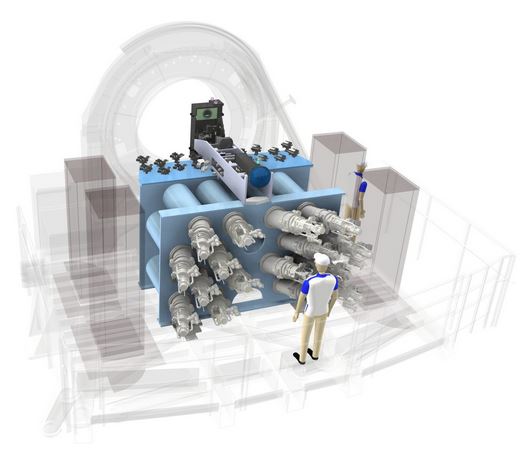
The Optics Business
-
30 August 2023
Project management